
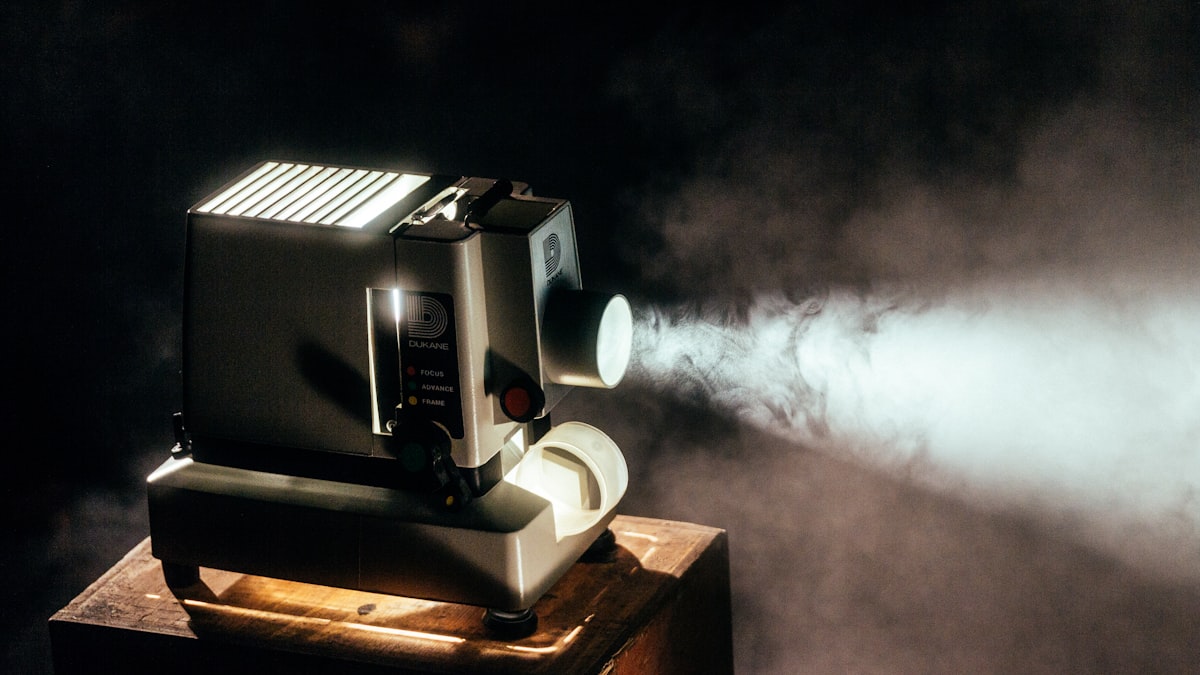
There's a haunting beauty in VHS artifacts. A tracking error. A color shift. Horizontal scan lines. Digital glitches that were once considered catastrophic failures are now deliberately recreated by artists. Why? Because they're nostalgic, mysterious, and somehow more human than perfect digital video.
How VHS Actually Works
VHS (Video Home System) stored video by encoding it as an analog signal on magnetic tape. Unlike digital video, which is discrete and mathematical, analog video is continuous and imperfect. Every component of the playback chain could introduce artifacts:
- Tracking errors: Misalignment between tape and head creating horizontal distortion
- Color shift (chroma/luma separation): The color information getting out of sync with brightness
- Dropout: Dust or wear causing brief signal loss
- Head switching noise: Visible lines where the video head switched between tape tracks
- Ghosting: Signal reflections creating faint duplicates
The VHS Aesthetic in Art
In the late 2000s and early 2010s, as VHS became obsolete, artists began romanticizing these "failures." The vaporwave movement embraced VHS artifacts as part of its aesthetic - glitchy, degraded, nostalgic video became a visual language for critiquing consumer culture and evoking late-90s/early-2000s nostalgia.
Why did VHS artifacts become cool? A few reasons:
- Analog warmth: Digital video feels cold; VHS feels organic and human
- Authenticity through degradation: Artifacts suggest something was "real" (filmed, not rendered)
- Nostalgia marketing: Millennials grew up with VHS; it triggers childhood memories
- Anti-perfection: Rebelling against the polished aesthetic of modern digital media
Common VHS Effects
Chromatic aberration: RGB channels separated, creating a color-fringe glitch especially at edges.
Scanlines: Horizontal lines visible on the image, mimicking CRT monitor scan.
VHS tracking: Horizontal distortion and noise bands across the video.
Color bleeding: Smearing of colors beyond their natural boundaries.
Interlacing artifacts: Jagged lines and combing where interlaced video doesn't blend correctly.
VHS in Modern Media
VHS aesthetic appears everywhere now:
- Music videos: Especially lo-fi and indie music
- Analog horror: Creepypasta videos deliberately made to look like degraded VHS recordings
- Fashion: Brands use VHS glitch in advertising
- Game design: Indie games use VHS effects to evoke nostalgic, dreamlike atmospheres
The Irony of Digital VHS
Here's the beautiful irony: we now use perfectly clean digital pixels to simulate the imperfections of analog decay. We're deliberately introducing artifacts that would have been considered defects a decade ago. This says something profound about how our aesthetic preferences evolve - what was once seen as a technical failure becomes a desired artistic quality.
Why VHS Glitch Endures
VHS nostalgia isn't going away anytime soon. As younger generations discover media they've never experienced directly, the artifacts become even more mysterious and appealing. It's the aesthetic of the unknown, the foreign, the past.
Ready to try it? Open GlitchArt Studio and experiment with this effect.